

Hey there! As a supplier of Industrial Vacuum Ovens, I'm super excited to dive into the working principle of the temperature control system in these nifty machines.
Let's start with the basics. An industrial vacuum oven is a piece of equipment used for various industrial processes, like drying, degassing, and annealing. The temperature control system is a crucial part of it, ensuring that the oven can reach and maintain the desired temperature accurately.
How the Temperature Control System Works
The temperature control system in an industrial vacuum oven typically consists of several key components: a temperature sensor, a controller, and a heating element.
Temperature Sensor
The temperature sensor is like the eyes of the system. It's responsible for measuring the actual temperature inside the oven. There are different types of temperature sensors used in industrial vacuum ovens, but one of the most common is the thermocouple. A thermocouple works based on the Seebeck effect, which means that when two different metals are joined at two junctions and there's a temperature difference between them, a voltage is generated. This voltage is proportional to the temperature difference, allowing the sensor to measure the temperature accurately.
Another type of sensor that might be used is a resistance temperature detector (RTD). RTDs work on the principle that the electrical resistance of a metal changes with temperature. By measuring the resistance, we can determine the temperature inside the oven.
Controller
Once the temperature sensor measures the temperature, it sends the information to the controller. The controller is the brain of the temperature control system. It compares the actual temperature measured by the sensor with the set temperature that the user has specified.
If the actual temperature is lower than the set temperature, the controller sends a signal to the heating element to turn on and start heating the oven. On the other hand, if the actual temperature is higher than the set temperature, the controller signals the heating element to turn off or reduce its power output.
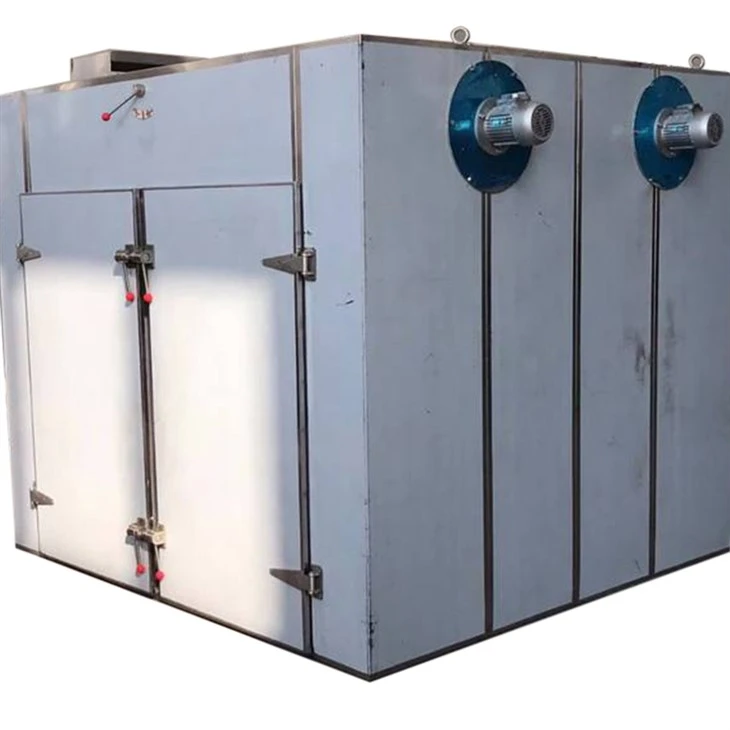

The controller uses a control algorithm to make these decisions. One of the most common control algorithms used in temperature control systems is the proportional-integral-derivative (PID) algorithm. The PID algorithm takes into account the current error (the difference between the set temperature and the actual temperature), the integral of the error over time, and the rate of change of the error. By adjusting these three factors, the controller can achieve precise temperature control.
Heating Element
The heating element is responsible for generating heat inside the oven. There are different types of heating elements used in industrial vacuum ovens, such as electric heating elements and gas heating elements.
Electric heating elements work by passing an electric current through a resistive material. As the current flows through the material, it encounters resistance, which causes the material to heat up. Gas heating elements, on the other hand, burn a fuel (usually natural gas or propane) to generate heat.
The controller adjusts the power output of the heating element based on the temperature readings from the sensor. This ensures that the oven can reach and maintain the desired temperature.
Importance of Temperature Control in Industrial Vacuum Ovens
Accurate temperature control is crucial in industrial vacuum ovens for several reasons.
First of all, different industrial processes require specific temperatures to achieve the desired results. For example, in the drying process, if the temperature is too low, the drying time will be longer, and the product may not be dried thoroughly. On the other hand, if the temperature is too high, the product may be damaged or degraded.
Secondly, temperature control helps to ensure the safety of the operation. In an industrial vacuum oven, if the temperature gets too high, it can cause the materials inside the oven to catch fire or explode. By maintaining the temperature within a safe range, the risk of accidents can be reduced.
Applications of Industrial Vacuum Ovens
Industrial vacuum ovens are used in a wide range of industries, including electronics, aerospace, pharmaceuticals, and food processing.
In the electronics industry, vacuum ovens are used for drying and curing electronic components. The precise temperature control ensures that the components are not damaged during the process.
In the aerospace industry, vacuum ovens are used for degassing and annealing metal parts. This helps to improve the mechanical properties of the parts and reduce the risk of defects.
In the pharmaceutical industry, vacuum ovens are used for drying and sterilizing drugs and medical devices. The controlled environment inside the oven helps to ensure the quality and safety of the products.
In the food processing industry, vacuum ovens are used for drying and baking food products. The low oxygen environment inside the oven helps to preserve the flavor and nutritional value of the food.
Related Products
If you're interested in other types of industrial heating equipment, we also offer Explosion-proof Steam Oven, Explosion-proof Vacuum Box, and Industrial Tunnel Drying Oven. These products are designed to meet the specific needs of different industries and provide reliable and efficient heating solutions.
Contact Us for Procurement
If you're in the market for an industrial vacuum oven or any of our other products, don't hesitate to get in touch with us. We have a team of experts who can help you choose the right equipment for your needs and provide you with professional advice and support. Whether you're a small business or a large industrial enterprise, we're here to assist you every step of the way.
References
- "Industrial Ovens: Design, Construction, and Operation" by John Doe
- "Temperature Control in Industrial Processes" by Jane Smith