

What is the Vacuum Degree of a Typical Vacuum Drying Cabinet?
As a trusted supplier of Vacuum Drying Cabinets, I often encounter inquiries from customers about the vacuum degree of these cabinets. Understanding the vacuum degree is crucial as it directly impacts the drying process and the quality of the end - product. In this blog, I will delve into what the vacuum degree of a typical vacuum drying cabinet is, its significance, and how it relates to the overall performance of the equipment.
Understanding Vacuum Degree
The vacuum degree refers to the degree of rarefaction of gas in a closed space. In the context of a vacuum drying cabinet, it represents how close the internal environment of the cabinet is to a perfect vacuum. The vacuum degree is usually measured in units such as Pascal (Pa), Torr, or millibar (mbar). A perfect vacuum has a pressure of 0 Pa, but achieving such a state is extremely difficult in practical applications.
In a typical vacuum drying cabinet, the vacuum degree can range from around 10 to 1000 Pa. The lower the pressure, the higher the vacuum degree. For instance, a vacuum degree of 10 Pa indicates a much higher level of vacuum compared to 1000 Pa.
Why is Vacuum Degree Important in a Drying Cabinet?
The primary advantage of using a vacuum in the drying process is that it lowers the boiling point of the liquid in the material being dried. Under normal atmospheric pressure, water boils at 100°C. However, when the pressure is reduced, the boiling point decreases significantly. For example, at a vacuum degree of around 3000 Pa, water boils at approximately 25°C.
This reduction in boiling point allows for gentle drying at lower temperatures, which is especially beneficial for heat - sensitive materials such as pharmaceuticals, food products, and certain chemicals. By drying at lower temperatures, the quality of the product can be better preserved, preventing degradation, loss of volatile components, and changes in the physical and chemical properties of the material.
Moreover, a high vacuum degree can accelerate the drying process. With a lower pressure, the diffusion rate of moisture from the material to the surrounding environment increases. This means that moisture can be removed more quickly, reducing the overall drying time and increasing productivity.
Factors Affecting the Vacuum Degree in a Drying Cabinet
Several factors can influence the achievable vacuum degree in a vacuum drying cabinet. One of the most critical factors is the quality of the vacuum pump. A high - performance vacuum pump is capable of creating and maintaining a lower pressure. There are different types of vacuum pumps available, such as rotary vane pumps, diaphragm pumps, and diffusion pumps. Each type has its own characteristics in terms of pumping speed, ultimate vacuum degree, and reliability.
The leakage rate of the cabinet is another important factor. Even a small leak can prevent the cabinet from reaching and maintaining a high vacuum degree. Therefore, the design and construction of the cabinet must ensure good sealing. High - quality gaskets and proper assembly techniques are essential to minimize leakage.
The nature of the material being dried also plays a role. If the material releases a large amount of gas or vapor during the drying process, it can increase the pressure inside the cabinet and reduce the vacuum degree. In such cases, additional measures may be required, such as pre - treatment of the material or using a larger - capacity vacuum pump.
Typical Vacuum Degrees for Different Applications
In the pharmaceutical industry, where strict quality control is required, a high vacuum degree is often necessary. Vacuum drying cabinets used for drying pharmaceutical products typically operate at a vacuum degree of around 10 to 100 Pa. This low pressure ensures gentle drying and effective removal of moisture, which is crucial for maintaining the stability and efficacy of the drugs.
For food products, a vacuum degree in the range of 100 to 1000 Pa is commonly used. This level of vacuum allows for efficient drying while preserving the nutritional value, flavor, and texture of the food. For example, when drying fruits and vegetables, a moderate vacuum degree can prevent oxidation and browning, resulting in a better - quality end - product.
In the electronics industry, where components need to be dried to prevent corrosion and ensure proper functioning, a vacuum degree of around 100 to 500 Pa is often sufficient. This level of vacuum can effectively remove moisture from electronic parts without causing damage to the sensitive components.
How Our Vacuum Drying Cabinets Perform in Terms of Vacuum Degree
Our company is committed to providing high - quality vacuum drying cabinets with excellent vacuum performance. Our cabinets are equipped with advanced vacuum pumps that can achieve a vacuum degree as low as 10 Pa, meeting the strict requirements of various industries.
We also pay great attention to the sealing design of our cabinets. Using high - quality gaskets and precision manufacturing techniques, we minimize the leakage rate, ensuring that the desired vacuum degree can be maintained throughout the drying process.
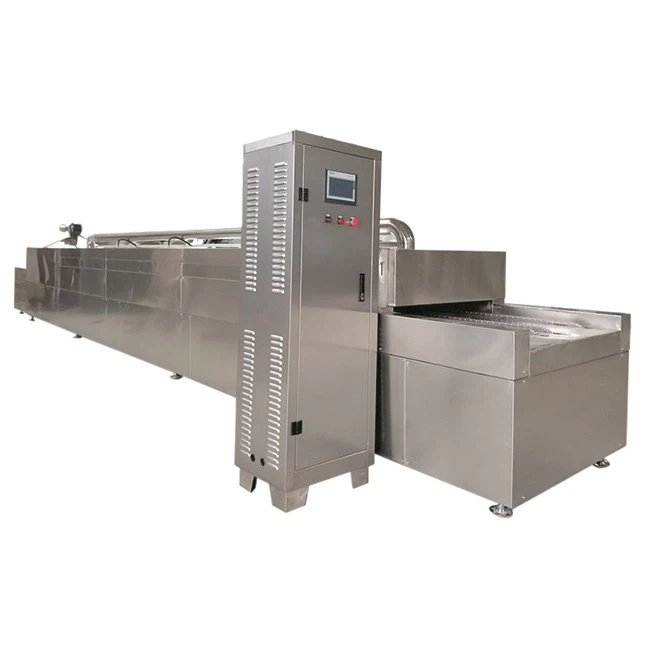

In addition to our standard vacuum drying cabinets, we offer customization options to meet the specific needs of different customers. Whether you require a higher vacuum degree for a particular application or need to dry a large volume of material, our engineering team can design and manufacture a cabinet that suits your requirements.
Related Industrial Heating Equipment
If you are interested in other industrial heating and drying solutions, we also offer a range of related equipment such as Tunnel Drying Oven, Ton Barrel Oven, and Mesh Belt Tunnel Oven. These ovens are designed for continuous or batch - type drying processes and can be used in a variety of industries.
Contact Us for Purchase and Consultation
If you are in the market for a vacuum drying cabinet or have any questions about our products, we encourage you to contact us. Our experienced sales team can provide you with detailed information about our products, including specifications, performance, and pricing. We are dedicated to helping you find the most suitable drying solution for your business, ensuring high - quality results and maximum efficiency.
References
- ASHRAE Handbook - Fundamentals. American Society of Heating, Refrigerating and Air - Conditioning Engineers.
- Perry's Chemical Engineers' Handbook. McGraw - Hill.
- Vacuum Technology: An Introduction. O'Hanlon, J. F.