

As a supplier of industrial vacuum ovens, I often encounter customers who are confused about the differences between single - chamber and multi - chamber industrial vacuum ovens. In this blog, I will delve into these differences to help you make an informed decision when choosing the right oven for your industrial needs.
1. Structure and Design
Single - chamber industrial vacuum ovens, as the name suggests, have a single enclosed space where the heating and vacuum - related processes take place. This simple design makes them relatively compact and easy to install. They are typically suitable for small - scale operations or when only one type of process needs to be carried out at a time. For example, if you are conducting small - batch drying of a single type of material, a single - chamber oven can be a cost - effective solution.
On the other hand, multi - chamber industrial vacuum ovens consist of multiple separate chambers. These chambers can be operated independently or in a coordinated manner. The design of multi - chamber ovens is more complex, often requiring more floor space for installation. However, this complexity also brings greater flexibility and efficiency. For instance, different chambers can be set to different temperatures, vacuum levels, and processing times simultaneously. This allows for parallel processing of different materials or different stages of the same process in different chambers.
2. Functionality and Applications
Single - Chamber Ovens
Single - chamber ovens are mainly used for simple and straightforward processes. They are ideal for applications such as drying, degassing, and annealing of a single type of material. For example, in the electronics industry, single - chamber vacuum ovens can be used to dry electronic components to remove moisture, which can improve the reliability and performance of the components. In the pharmaceutical industry, they can be used for the drying of small - batch drugs or raw materials.
The limited functionality of single - chamber ovens also means that they are easier to operate. Operators only need to set the parameters for one chamber, which reduces the risk of errors. However, if you need to perform multiple processes or handle different materials simultaneously, a single - chamber oven may not be sufficient.

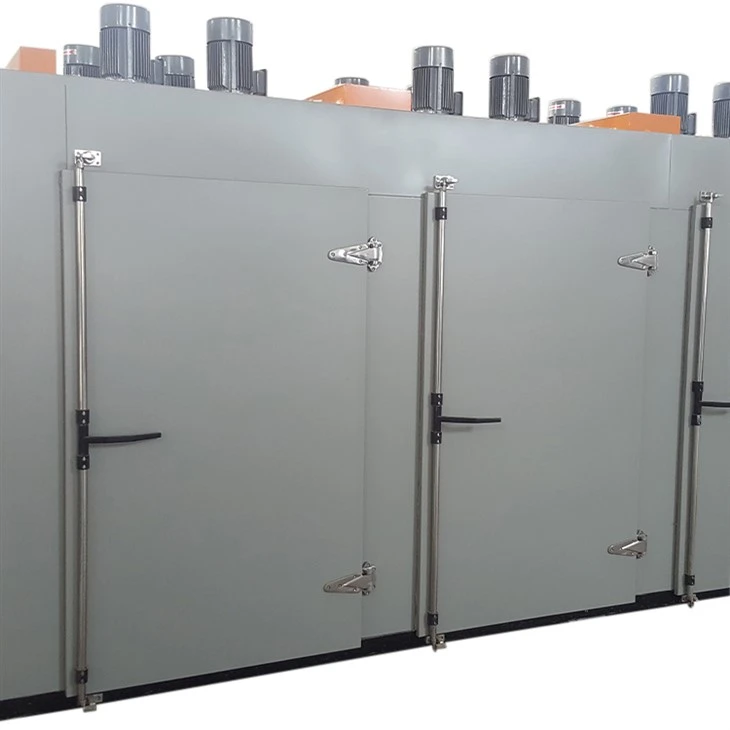
Multi - Chamber Ovens
Multi - chamber ovens offer a wide range of functionality. They can handle complex processes that involve multiple steps or different materials. For example, in the food industry, one chamber can be used for pre - heating the food, while another chamber can be used for vacuum drying at a different temperature. In the aerospace industry, multi - chamber ovens can be used for the curing of composite materials, where different chambers can simulate different environmental conditions during the curing process.
The ability to perform multiple processes simultaneously in different chambers significantly increases the productivity of multi - chamber ovens. They are also suitable for large - scale production, where a high volume of materials needs to be processed efficiently.
3. Performance and Efficiency
Heating and Cooling Rates
Single - chamber ovens generally have a relatively fast heating and cooling rate because the heat transfer is concentrated in a single space. This is beneficial for processes that require quick temperature changes, such as rapid annealing. However, the small chamber size may limit the amount of material that can be processed at once, which may affect the overall production efficiency.
Multi - chamber ovens may have slightly slower heating and cooling rates in each chamber due to the more complex structure and the need to maintain different conditions in different chambers. However, the parallel processing capability of multi - chamber ovens can offset this disadvantage. By processing multiple batches of materials simultaneously, the overall throughput can be much higher than that of a single - chamber oven.
Vacuum Performance
Both single - chamber and multi - chamber ovens can achieve high - quality vacuum levels. However, single - chamber ovens may be more effective in maintaining a stable vacuum because there is only one chamber to seal and control. In multi - chamber ovens, the vacuum system needs to be more sophisticated to ensure that each chamber can maintain the required vacuum level independently. This may increase the cost and complexity of the vacuum system in multi - chamber ovens.
4. Cost Considerations
Initial Investment
Single - chamber industrial vacuum ovens are generally less expensive than multi - chamber ovens. The simpler design and fewer components result in a lower manufacturing cost, which is reflected in the purchase price. This makes single - chamber ovens a more attractive option for small businesses or those with a limited budget.
Multi - chamber ovens, on the other hand, require a higher initial investment. The complex design, additional chambers, and more sophisticated control systems all contribute to the higher cost. However, it is important to consider the long - term benefits and productivity gains that multi - chamber ovens can offer.
Operating Costs
The operating costs of single - chamber ovens are usually lower. They consume less energy because there is only one chamber to heat and maintain. The maintenance of single - chamber ovens is also relatively simple, which reduces the maintenance cost.
Multi - chamber ovens may have higher operating costs due to the larger size, more complex control systems, and higher energy consumption. However, the increased productivity and the ability to perform multiple processes simultaneously can offset these costs in the long run, especially for large - scale production.
5. Our Product Range
As an industrial vacuum oven supplier, we offer a wide range of single - chamber and multi - chamber industrial vacuum ovens to meet the diverse needs of our customers. Our single - chamber ovens are designed for simplicity and reliability, suitable for small - scale operations. They are easy to install and operate, and can provide high - quality processing results for various applications.
Our multi - chamber ovens are engineered for high - performance and flexibility. They are equipped with advanced control systems that allow for precise control of temperature, vacuum level, and processing time in each chamber. Whether you are in the food, electronics, pharmaceutical, or aerospace industry, our multi - chamber ovens can help you improve your production efficiency and product quality.
In addition to vacuum ovens, we also offer other industrial heating equipment, such as Industrial Tunnel Drying Oven, Electrically Heated Oven, and Raw Material Barrel Heating Oven. These products are designed to work together to provide comprehensive industrial heating solutions for our customers.
6. Conclusion
In conclusion, the choice between single - chamber and multi - chamber industrial vacuum ovens depends on your specific industrial needs. If you have a small - scale operation, simple processes, and a limited budget, a single - chamber oven may be the best choice. However, if you need to perform complex processes, handle different materials simultaneously, and have a high - volume production requirement, a multi - chamber oven is more suitable.
As an experienced industrial vacuum oven supplier, we are committed to providing high - quality products and professional technical support. If you are interested in our products or need more information about single - chamber and multi - chamber industrial vacuum ovens, please feel free to contact us for procurement and negotiation. We will work with you to find the most suitable solution for your business.
References
- "Industrial Oven Handbook" by John Smith
- "Vacuum Technology in Industrial Processes" by Mary Johnson
- Various industry reports on industrial heating equipment