

Hey there! As a supplier of Mould Preheating Ovens, I often get asked about the different types of heating elements used in these ovens. It's a crucial topic because the right heating element can significantly impact the performance and efficiency of the oven. So, let's dive right in and explore the various heating element types you might encounter in a Mould Preheating Oven.
Electric Resistance Heating Elements
One of the most common types of heating elements in Mould Preheating Ovens is the electric resistance heating element. These elements work on a pretty simple principle. When an electric current passes through a resistive material, it encounters resistance, which in turn generates heat. It's like when you plug in a toaster, and the wires inside get hot and start to toast your bread.
In a Mould Preheating Oven, electric resistance heating elements are usually made of materials like nichrome, which is an alloy of nickel and chromium. Nichrome is a great choice because it has a high melting point, which means it can withstand the high temperatures required for preheating molds. It also has a relatively high electrical resistance, which allows it to generate a lot of heat.
The advantage of electric resistance heating elements is that they are very efficient. They convert almost all of the electrical energy they consume into heat, which means you're not wasting a lot of energy. They're also easy to control. You can adjust the amount of heat they produce by simply changing the electrical current flowing through them. This makes them ideal for applications where you need precise temperature control, like preheating molds.
However, there are also some drawbacks. Electric resistance heating elements can be expensive to operate, especially if you're using them for long periods of time. They also take a while to heat up and cool down, which can slow down your production process.
Gas-Fired Heating Elements
Another option for heating a Mould Preheating Oven is to use gas-fired heating elements. These elements burn natural gas or propane to generate heat. The heat is then transferred to the oven chamber through a heat exchanger.
Gas-fired heating elements have several advantages. First of all, they are very cost-effective. Natural gas and propane are generally cheaper than electricity, so using gas-fired heating elements can save you a lot of money in the long run. They also heat up very quickly, which means you can start preheating your molds faster.
Gas-fired heating elements are also very powerful. They can generate a lot of heat, which makes them suitable for large-scale industrial applications. They're also relatively easy to maintain. As long as you keep the gas supply clean and the burner properly adjusted, you shouldn't have any major problems.
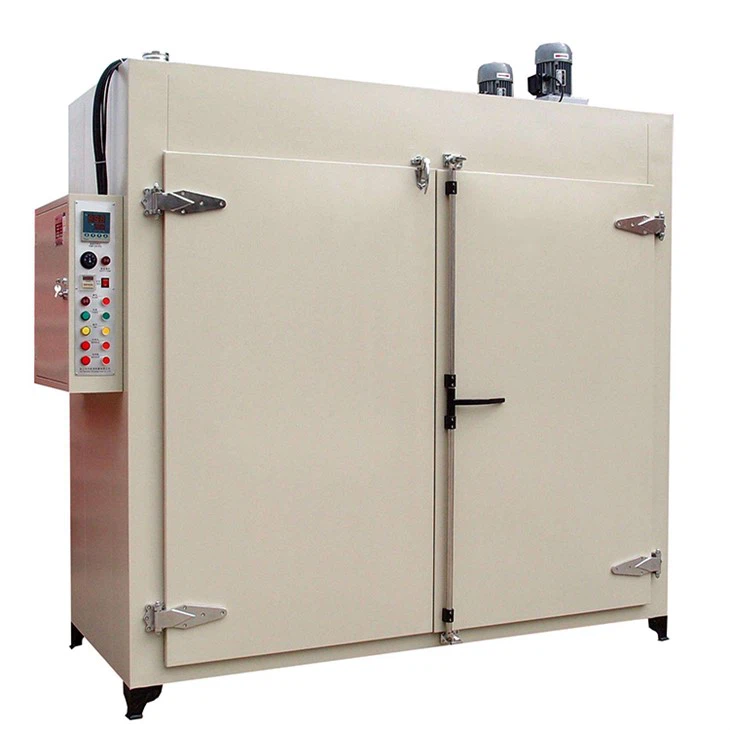

But there are also some disadvantages. Gas-fired heating elements require a gas supply, which means you need to have a gas line installed in your facility. This can be expensive and time-consuming. They also produce emissions, which can be a concern if you're operating in an environmentally sensitive area.
Steam Heating Elements
Steam heating elements are another type of heating element that can be used in a Mould Preheating Oven. These elements use steam to transfer heat to the oven chamber. Steam is a very efficient heat transfer medium because it has a high latent heat of vaporization. This means that it can carry a lot of heat energy without changing its temperature very much.
Steam heating elements are often used in applications where you need a large amount of heat to be transferred quickly. They're also very reliable. As long as you have a steady supply of steam, you can be sure that your oven will maintain a consistent temperature.
If you're interested in a steam heating solution, you can check out our Steam Heating Oven. It's designed to provide efficient and reliable steam heating for your molds.
However, steam heating elements also have some limitations. They require a steam generator, which can be expensive to install and operate. They also need to be carefully maintained to prevent corrosion and scale buildup.
Hot Air Circulation Heating Elements
Hot air circulation heating elements work by circulating hot air around the oven chamber. The hot air is usually generated by an electric heater or a gas burner. The air is then circulated through the oven using a fan.
Hot air circulation heating elements are very effective at distributing heat evenly throughout the oven chamber. This means that your molds will be heated uniformly, which can improve the quality of your products. They're also very versatile. You can adjust the temperature and the airflow rate to suit your specific needs.
If you're looking for a hot air circulation solution, take a look at our Hot Air Circulation Furnace. It's designed to provide efficient and uniform heating for your molds.
The disadvantage of hot air circulation heating elements is that they can be a bit noisy. The fan used to circulate the air can create a lot of noise, which can be a problem if you're operating in a quiet environment. They also require a lot of energy to operate, especially if you're using a large fan.
Infrared Heating Elements
Infrared heating elements work by emitting infrared radiation, which is absorbed by the molds and converted into heat. Infrared radiation is a type of electromagnetic radiation that has a longer wavelength than visible light. It can penetrate the surface of the molds and heat them from the inside out.
Infrared heating elements are very fast. They can heat up the molds very quickly, which means you can reduce your production time. They're also very energy-efficient. They only heat the objects that are in their path, which means you're not wasting energy heating the surrounding air.
However, infrared heating elements can be a bit expensive to purchase. They also require a lot of maintenance. The infrared emitters need to be replaced regularly to ensure that they're working properly.
Curing and Drying Applications
In some cases, you might also need to use a Mould Preheating Oven for curing or drying applications. For these applications, you might want to consider using a Curing Drying Oven. These ovens are designed to provide precise temperature and humidity control, which is essential for curing and drying processes.
Conclusion
So, there you have it! These are the main types of heating elements used in a Mould Preheating Oven. Each type has its own advantages and disadvantages, so it's important to choose the one that's right for your specific needs. If you're not sure which type of heating element is best for you, don't hesitate to reach out to us. We're here to help you find the perfect solution for your Mould Preheating Oven.
Whether you're looking for a cost-effective option, a fast-heating solution, or a precise temperature control system, we have the expertise and the products to meet your needs. So, if you're in the market for a Mould Preheating Oven, why not contact us today to discuss your requirements and start the procurement process? We're confident that we can provide you with a high-quality oven that will help you improve your production efficiency and the quality of your products.
References
- ASM Handbook Volume 4: Heat Treating, ASM International
- Industrial Heating Equipment Handbook, McGraw-Hill Professional