

Hey there! As a supplier of Mould Preheating Ovens, I've seen firsthand how crucial it is for these ovens to operate smoothly. In this blog, I'll share with you the key indicators that show your Mould Preheating Oven is running normally.
Temperature Stability
One of the most important indicators of a well - functioning Mould Preheating Oven is temperature stability. You see, moulds need to be heated to a specific and consistent temperature for proper preheating. A fluctuating temperature can lead to uneven heating of the mould, which may cause defects in the final product.
To check for temperature stability, you can use a good quality thermometer. Place it inside the oven at different positions and monitor the temperature over a period of time. If the temperature remains within a narrow range (say, ± 2 - 3 degrees Celsius of the set temperature), then your oven is doing a great job.
Let's say you set the oven to preheat the moulds at 150 degrees Celsius. If the temperature keeps jumping between 140 and 160 degrees, that's a red flag. It could be due to a faulty heating element or a problem with the temperature control system.
Some of our advanced Mould Preheating Ovens come with digital temperature controllers that can precisely maintain the set temperature. These controllers are really handy as they can also provide real - time temperature readings, so you can always keep an eye on what's going on inside the oven.
Uniform Heating
Uniform heating is another critical aspect. The whole point of preheating the mould is to ensure that every part of it reaches the desired temperature. If some areas of the mould are hotter than others, it can cause warping or uneven curing of the material used with the mould.
To test for uniform heating, you can use thermal imaging cameras. These cameras can show you the temperature distribution across the surface of the mould. In a properly functioning oven, the thermal image should show a relatively even color distribution, indicating that the heat is spread evenly.
If you notice hot spots or cold spots on the thermal image, it might mean there are issues with the air circulation inside the oven. The air in the oven needs to flow freely to transfer heat uniformly. Blocked vents or a malfunctioning fan can disrupt this air circulation.
Our ovens are designed with efficient airflow systems. They have strategically placed fans and vents to ensure that the hot air is circulated evenly throughout the oven chamber, giving you that much - needed uniform heating.
Heating Rate
The heating rate is also an important indicator. A normal Mould Preheating Oven should be able to reach the set temperature within a reasonable amount of time. If it takes too long to heat up, it can slow down your production process.
The ideal heating rate depends on the size and type of the oven, as well as the size of the mould. Generally, for smaller moulds, the oven should be able to reach the set temperature within 15 - 30 minutes. For larger moulds, it might take a bit longer, but it shouldn't exceed an hour or so.
If the heating rate is slower than expected, it could be because the heating element is not working at full capacity. Maybe it's old and needs to be replaced, or there could be an issue with the power supply to the oven.
We offer different models of Mould Preheating Ovens with varying heating capacities. So, you can choose the one that best suits your production requirements and get the right heating rate for your moulds.
Door Seal Integrity
The door seal of the Mould Preheating Oven plays a vital role in its normal operation. A good door seal prevents heat from escaping the oven. If heat is leaking out, it not only wastes energy but also makes it harder for the oven to maintain the set temperature.
To check the door seal, you can do a simple paper test. Close the oven door on a thin piece of paper. Try to pull the paper out. If it slips out easily, the seal is not tight enough. You might need to replace the door seal.
A damaged or worn - out door seal can also let in cold air, which can disrupt the temperature inside the oven. In our ovens, we use high - quality door seals that are designed to last. They provide a tight and reliable seal, ensuring that the heat stays where it's supposed to be.
Noise Level
The noise level of the oven can tell you a lot about its condition. A normal Mould Preheating Oven should operate quietly. If you start hearing strange noises like rattling, grinding, or screeching, it's a sign that something is wrong.
Rattling noises could be due to loose parts inside the oven, such as a loose fan blade or a vibrating heating element. Grinding or screeching noises might indicate a problem with the motor or the bearings.
If you notice an increase in the noise level of your oven, it's best to shut it down and have it inspected. Ignoring these noises can lead to more serious problems and even cause the oven to break down completely.
Energy Consumption
Monitoring the energy consumption of the Mould Preheating Oven is a good way to gauge its normal operation. A well - functioning oven should consume a consistent amount of energy. If you notice a sudden spike in energy consumption, it could be a sign of inefficiency.
This could be due to issues like a faulty heating element that is using more power than necessary, or a problem with the insulation of the oven. Poor insulation allows heat to escape, forcing the oven to work harder and consume more energy to maintain the temperature.
We design our Mould Preheating Ovens with energy - efficient features. For example, we use high - quality insulation materials to minimize heat loss. This not only saves you money on energy bills but also reduces your environmental impact.
Control Panel Functionality
The control panel is the brain of the Mould Preheating Oven. It allows you to set the temperature, timer, and other parameters. A normal control panel should be easy to use and all the buttons and displays should work properly.
If you find that some buttons are unresponsive or the display is showing incorrect information, it could be a sign of a control panel malfunction. This can be caused by a software glitch or a hardware problem.

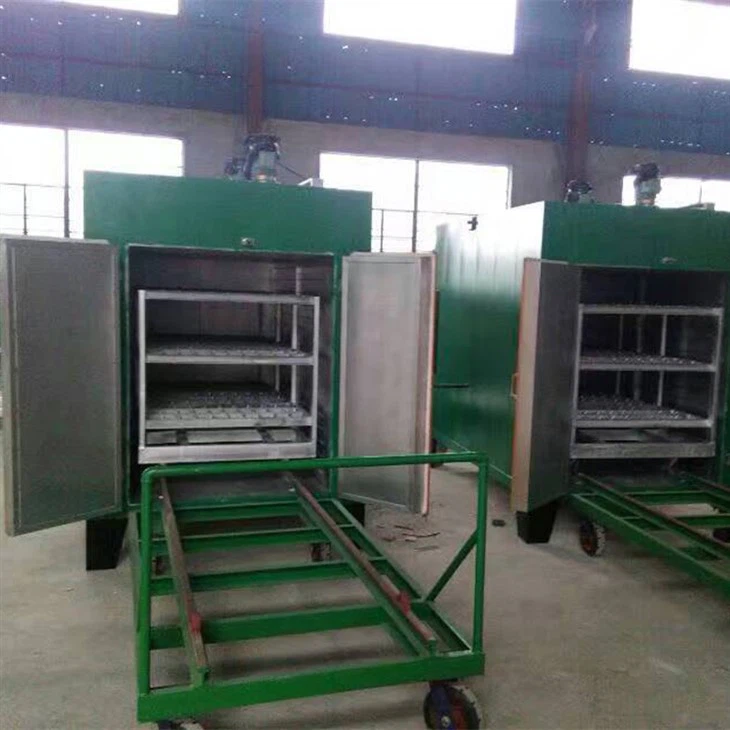
Our ovens come with user - friendly control panels. They are designed to be intuitive, so even if you're not a tech expert, you can easily operate the oven. And in case of any issues, our technical support team is always ready to help you troubleshoot.
Safety Features
Safety features are a must - have in any Mould Preheating Oven. A normal oven should have features like over - temperature protection, which shuts off the heating element if the temperature goes above a certain limit.
It should also have a door interlock system that prevents the oven from operating when the door is open. This protects you from getting burned by the hot interior of the oven.
We take safety very seriously. All our Mould Preheating Ovens are equipped with a comprehensive set of safety features to ensure the well - being of our customers.
In conclusion, keeping an eye on these indicators can help you ensure that your Mould Preheating Oven is operating normally. If you're in the market for a new Mould Preheating Oven, we've got you covered. We offer a wide range of high - quality ovens, including Electric Drying Oven, Industrial Benchtop Oven, and Electrical Heating Oven.
Whether you're a small - scale manufacturer or a large industrial operation, we have the perfect oven for your needs. If you're interested in learning more or discussing your specific requirements, feel free to reach out to us. We're always happy to have a chat and help you find the right solution for your mould preheating needs.
References
- "Industrial Oven Operation and Maintenance Handbook", XYZ Publishing
- "Thermal Engineering Principles for Ovens", ABC Press