

Hey there! As a supplier of industrial curing ovens, I often get asked whether these ovens can be used for adhesive curing. Well, the short answer is yes, but there's a whole lot more to it than that. So, let's dive in and explore this topic in detail.
Understanding Adhesive Curing
First off, we need to understand what adhesive curing is all about. Adhesive curing is the process by which an adhesive changes from a liquid or semi - liquid state to a solid state. This transformation is crucial as it determines the strength, durability, and overall performance of the bond created by the adhesive.
There are different types of adhesives, and each has its own curing requirements. Some adhesives cure at room temperature, while others need heat to speed up the process. Heat - activated adhesives, for example, rely on the application of heat to trigger a chemical reaction that results in curing. This is where industrial curing ovens come into play.
How Industrial Curing Ovens Work for Adhesive Curing
Industrial curing ovens are designed to provide a controlled environment where temperature, humidity, and airflow can be regulated. When it comes to adhesive curing, these factors are super important.
Temperature is perhaps the most critical factor. Different adhesives have specific temperature ranges at which they cure optimally. An industrial curing oven allows us to set and maintain the exact temperature required for the adhesive we're working with. For instance, some high - performance adhesives might need to be cured at temperatures as high as 200°C or more, while others can cure at much lower temperatures, around 50 - 100°C.
Humidity also plays a role. Some adhesives are sensitive to moisture, and a high - humidity environment can affect the curing process. Industrial curing ovens can be equipped with humidity control systems to ensure that the humidity levels are kept within the ideal range for the adhesive.
Airflow is another key aspect. Proper airflow helps to distribute heat evenly throughout the oven, ensuring that all parts of the adhesive - bonded components are cured uniformly. It also helps to remove any volatile compounds that might be released during the curing process.
Types of Industrial Curing Ovens for Adhesive Curing
There are several types of industrial curing ovens that can be used for adhesive curing. Let's take a look at a few of them.

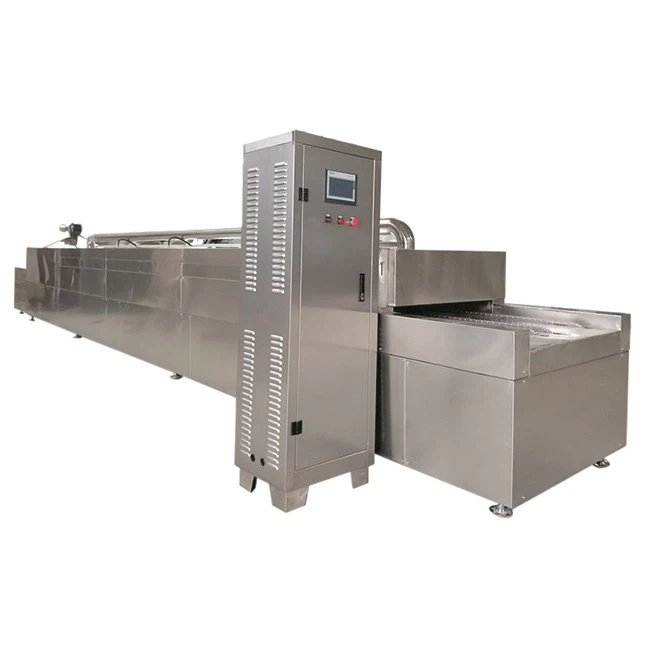
Mesh Belt Tunnel Oven
A Mesh Belt Tunnel Oven is a great option for continuous adhesive curing processes. It consists of a long tunnel with a mesh belt running through it. The components with the adhesive are placed on the mesh belt and slowly move through the tunnel. As they move, they are exposed to the controlled temperature and airflow inside the oven. This type of oven is ideal for high - volume production as it allows for a continuous flow of components, increasing efficiency.
Explosion - proof Vacuum Box
For adhesives that are sensitive to oxygen or need to be cured in a vacuum environment, an Explosion - proof Vacuum Box is the way to go. This type of oven can create a vacuum inside the chamber, removing oxygen and other gases that might interfere with the curing process. It's also explosion - proof, which is crucial when dealing with volatile adhesives.
Electrically Heated Oven
An Electrically Heated Oven is a versatile option for adhesive curing. It uses electric heating elements to generate heat, and it's relatively easy to control the temperature. These ovens are suitable for a wide range of adhesive curing applications, from small - scale laboratory work to large - scale industrial production.
Benefits of Using Industrial Curing Ovens for Adhesive Curing
Using an industrial curing oven for adhesive curing offers several benefits.
Improved Bond Strength
By providing a controlled curing environment, industrial curing ovens ensure that the adhesive cures properly, resulting in a stronger bond. This is especially important in applications where the bond needs to withstand high stress or harsh environmental conditions.
Consistent Results
With precise temperature, humidity, and airflow control, industrial curing ovens can produce consistent results every time. This is crucial for quality control in manufacturing processes, as it ensures that all products meet the same high standards.
Faster Curing Times
Many adhesives cure much faster when heat is applied. Industrial curing ovens can significantly reduce the curing time, increasing production efficiency and allowing for faster turnaround times.
Versatility
Industrial curing ovens can be used with a wide variety of adhesives, making them a versatile tool in any manufacturing or assembly operation. Whether you're working with epoxy, polyurethane, or acrylic adhesives, there's an industrial curing oven that can meet your needs.
Considerations When Using Industrial Curing Ovens for Adhesive Curing
While industrial curing ovens offer many benefits, there are also some considerations to keep in mind.
Adhesive Compatibility
Not all adhesives are suitable for curing in an industrial oven. Some adhesives might break down or release harmful chemicals at high temperatures. It's important to check the manufacturer's specifications for the adhesive to ensure that it can be cured in an oven and to determine the appropriate curing conditions.
Component Design
The design of the components being bonded can also affect the curing process. Complex shapes or large components might require special considerations, such as longer curing times or modified airflow patterns, to ensure that all parts of the adhesive are cured properly.
Safety
Safety is always a top priority when working with industrial curing ovens. The ovens should be properly installed, maintained, and operated to prevent accidents. This includes following all safety guidelines, using appropriate personal protective equipment, and ensuring that the oven is equipped with safety features such as over - temperature protection and ventilation systems.
Conclusion
So, to answer the question, yes, an industrial curing oven can definitely be used for adhesive curing. It offers a controlled environment that allows for precise regulation of temperature, humidity, and airflow, resulting in stronger bonds, consistent results, and faster curing times.
If you're in the market for an industrial curing oven for your adhesive curing needs, we're here to help. We offer a wide range of high - quality industrial curing ovens, including Mesh Belt Tunnel Ovens, Explosion - proof Vacuum Boxes, and Electrically Heated Ovens. Our team of experts can work with you to determine the best oven for your specific application and provide you with all the support you need.
Don't hesitate to reach out if you have any questions or if you're ready to start a conversation about your industrial curing oven requirements. We're looking forward to working with you!
References
- "Adhesive Bonding Technology: An Introduction" by David A. Dillard
- "Industrial Ovens: Design, Operation, and Maintenance" by John Smith