

Hey there! As a supplier of Curing Drying Ovens, I often get asked about how to select a curing drying oven with a high - precision temperature sensor. It's a crucial decision, and I'm here to break it down for you.
First off, let's talk about why a high - precision temperature sensor is so important. In a curing drying oven, accurate temperature control is key. Whether you're drying delicate electronic components, curing coatings, or heat - treating materials, even a small temperature deviation can lead to sub - par results. A high - precision temperature sensor ensures that the oven maintains the exact temperature you need throughout the process.
1. Accuracy Requirements
When selecting a curing drying oven, the first thing you need to consider is your accuracy requirements. Different applications demand different levels of temperature precision. For example, in the electronics industry, where components are sensitive to heat, you might need an oven with a temperature accuracy of ±0.1°C or even better. On the other hand, if you're using the oven for general drying purposes, an accuracy of ±1°C might be sufficient.
Think about what you'll be using the oven for. Are you working with high - value products that require tight temperature control? Or is it more of a general - purpose application? This will help you determine the level of accuracy you need from the temperature sensor.
2. Sensor Type
There are several types of temperature sensors available, each with its own advantages and disadvantages.
- Thermocouples: These are one of the most common types of temperature sensors. They're relatively inexpensive, have a wide temperature range, and are durable. However, their accuracy might not be as high as some other types. Thermocouples work by generating a voltage that's proportional to the temperature difference between two junctions.
- RTDs (Resistance Temperature Detectors): RTDs are known for their high accuracy and stability. They work by measuring the change in electrical resistance of a metal wire as the temperature changes. RTDs are more accurate than thermocouples but are also more expensive.
- Thermistors: Thermistors are highly sensitive to temperature changes. They're often used in applications where a high level of sensitivity is required. However, they have a relatively narrow temperature range compared to thermocouples and RTDs.
When choosing a sensor type, consider your budget, the required accuracy, and the temperature range of your application.
3. Temperature Range
The temperature range of the oven is another important factor. Make sure the oven can reach and maintain the temperatures you need for your specific application. Some curing drying ovens can reach temperatures as high as 500°C or more, while others are designed for lower - temperature applications, such as 50 - 150°C.
Check the specifications of the oven and the temperature sensor to ensure they can handle the temperature range you require. Also, consider the stability of the temperature within that range. A high - precision temperature sensor should be able to maintain a consistent temperature, even at the upper or lower limits of the range.

4. Response Time
The response time of the temperature sensor is crucial, especially in applications where rapid temperature changes are required. A fast - responding sensor can quickly detect and adjust to changes in temperature, ensuring that the oven maintains the desired temperature.
For example, if you're using the oven for a process that involves multiple temperature cycles, a sensor with a short response time will be able to keep up with the changes and provide accurate temperature control. On the other hand, a slow - responding sensor might cause delays in temperature adjustments, leading to inconsistent results.
5. Calibration and Maintenance
A high - precision temperature sensor needs to be calibrated regularly to ensure its accuracy. Look for an oven that comes with a calibration procedure or has the option to be calibrated by a professional. Some ovens have built - in calibration features that make it easy to check and adjust the sensor's accuracy.
In addition to calibration, consider the maintenance requirements of the temperature sensor. Some sensors might need to be replaced more frequently than others, depending on the application and the environment in which the oven is used. Make sure you understand the maintenance schedule and costs associated with the sensor.
6. Compatibility with the Oven
The temperature sensor should be compatible with the oven's control system. The oven's control panel should be able to read and interpret the data from the sensor accurately. Some ovens come with pre - installed sensors, while others allow you to choose the sensor you want.
If you're using an oven with a pre - installed sensor, make sure it meets your accuracy and temperature range requirements. If you have the option to choose a sensor, make sure it's compatible with the oven's control system and can be easily integrated.
7. Additional Features
Some curing drying ovens come with additional features that can enhance the performance of the temperature sensor. For example, some ovens have multiple sensors placed at different locations inside the oven to ensure uniform temperature distribution. This can be especially useful in large - scale applications where maintaining a consistent temperature throughout the oven is crucial.
Other features might include data logging capabilities, which allow you to monitor and record the temperature over time. This can be useful for quality control and process optimization.
Product Recommendations
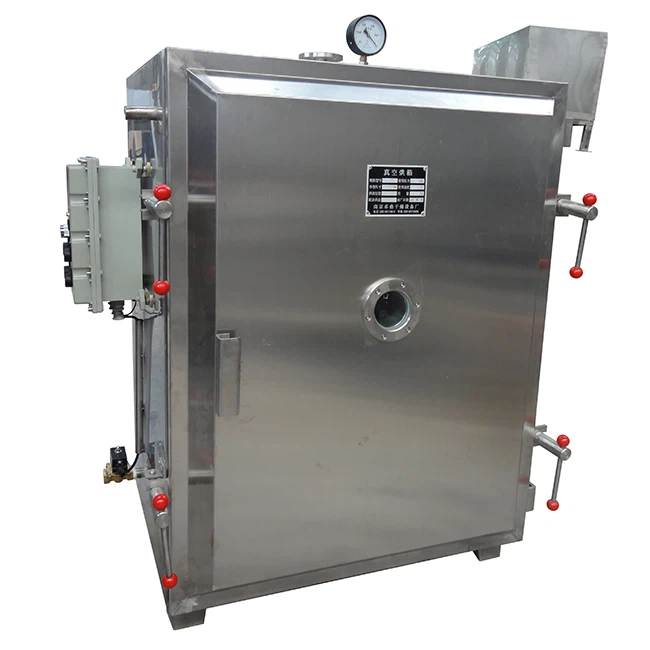
As a supplier, I can recommend some of our products that are equipped with high - precision temperature sensors. We have the Explosion - proof Vacuum Box, which is great for applications that require a controlled environment. The high - precision temperature sensor in this oven ensures accurate temperature control even in a vacuum environment.
Our Raw Material Drum Hot Melt Oven is another excellent option. It's designed for melting and drying raw materials in drums, and the high - precision temperature sensor helps to maintain the optimal temperature for the process.
If you need an oven for applications where explosion - proof is a concern, our Explosion - proof Hot Air Circulation Oven is a great choice. The temperature sensor in this oven provides accurate temperature control while ensuring safety in potentially hazardous environments.
Conclusion
Selecting a curing drying oven with a high - precision temperature sensor is a complex decision that requires careful consideration of your application's requirements. By considering factors such as accuracy, sensor type, temperature range, response time, calibration, compatibility, and additional features, you can choose an oven that meets your needs.
If you're interested in learning more about our Curing Drying Ovens or have any questions about selecting the right oven for your application, don't hesitate to contact us. We're here to help you make the best decision for your business.
References
- "Industrial Oven Handbook", published by Industrial Heating Equipment Association
- "Temperature Sensors: Principles and Applications", by John Doe