

Hey there! As a supplier of Wheel Curing Ovens, I often get asked about the anti - static requirements for these machines. So, I thought I'd share some insights on this topic to help you understand what's crucial when it comes to anti - static measures in a wheel curing oven.
First off, let's understand why anti - static is such a big deal in a wheel curing oven. During the curing process, there are a lot of things going on. You've got high temperatures, chemicals, and materials that are being transformed. Static electricity can build up easily in such an environment. And this static can lead to a bunch of problems. For one, it can attract dust and other particles, which can contaminate the wheels during the curing process. This is a huge no - no because it can affect the quality and finish of the wheels. Also, in extreme cases, static electricity can cause sparks, which is extremely dangerous, especially when there are flammable materials around.
Now, let's dive into the anti - static requirements.
Grounding
One of the most basic and essential anti - static requirements is proper grounding. The wheel curing oven needs to be grounded effectively. This means connecting the oven to the earth through a grounding wire. Grounding provides a path for the static electricity to flow safely into the ground, preventing it from building up within the oven. A good grounding system should have a low resistance, usually less than a certain value (it can vary depending on local electrical codes, but generally, a resistance of less than 10 ohms is a good target). When installing the oven, make sure that the grounding connection is tight and secure. Any loose connections can compromise the effectiveness of the grounding and allow static to build up.
Conductive Materials
Using conductive materials in the construction of the wheel curing oven is another important anti - static measure. For example, the interior walls of the oven can be made of conductive metals or coated with conductive paints. These conductive materials help to dissipate static electricity. When static charges build up on the surface of the oven, they can quickly spread across the conductive material and then be safely grounded. Conductive flooring in the area around the oven is also a great idea. Workers walking around the oven can generate static electricity on their shoes, and conductive flooring can help to transfer this static charge away from the workers and the oven.
Anti - Static Coatings
Applying anti - static coatings to various parts of the oven can be very effective. These coatings are designed to reduce the build - up of static electricity on surfaces. They work by either making the surface more conductive or by preventing the generation of static charges in the first place. There are different types of anti - static coatings available, such as solvent - based and water - based coatings. Solvent - based coatings tend to be more durable, but they may have some environmental and safety concerns due to the solvents. Water - based coatings are more environmentally friendly but may not be as long - lasting in some cases. You need to choose the coating based on your specific requirements and the operating conditions of the oven.
Ionization
Ionization is a more advanced anti - static technique. Ionizers can be installed inside the wheel curing oven. These devices generate ions (both positive and negative) that neutralize the static charges in the air and on surfaces. There are two main types of ionizers: corona discharge ionizers and photo - ionization ionizers. Corona discharge ionizers work by creating a high - voltage electrical field that ionizes the air molecules. Photo - ionization ionizers use ultraviolet light to ionize the air. Ionizers can be very effective in reducing static electricity, especially in areas where other anti - static measures may not be sufficient.
Humidity Control
Controlling the humidity in the environment around the wheel curing oven can also help with anti - static. Higher humidity levels can reduce the build - up of static electricity. When the air is more humid, the moisture in the air helps to conduct the static charges away. However, you need to be careful not to let the humidity get too high, as this can cause other problems such as corrosion in the oven. A relative humidity level of around 40% - 60% is usually a good range to aim for. You can use humidifiers or dehumidifiers to adjust the humidity as needed.
Worker Safety and Training
Don't forget about the workers. They need to be trained on anti - static safety measures. Workers should wear anti - static clothing and shoes. Anti - static clothing is made of special fabrics that prevent the build - up of static electricity on the body. Anti - static shoes have conductive soles that help to transfer static charges from the body to the ground. Workers should also be trained on how to handle materials in the oven to minimize static generation. For example, they should avoid dragging materials across surfaces, as this can generate a lot of static.
Monitoring and Maintenance
Regular monitoring and maintenance of the anti - static systems in the wheel curing oven are crucial. You need to regularly check the grounding system to make sure it's still working properly. Test the resistance of the grounding wire periodically. Check the conductive materials and anti - static coatings for any signs of wear or damage. If the coatings are starting to peel or wear off, they need to be reapplied. For ionizers, make sure they are working correctly and that the ion output is within the specified range.

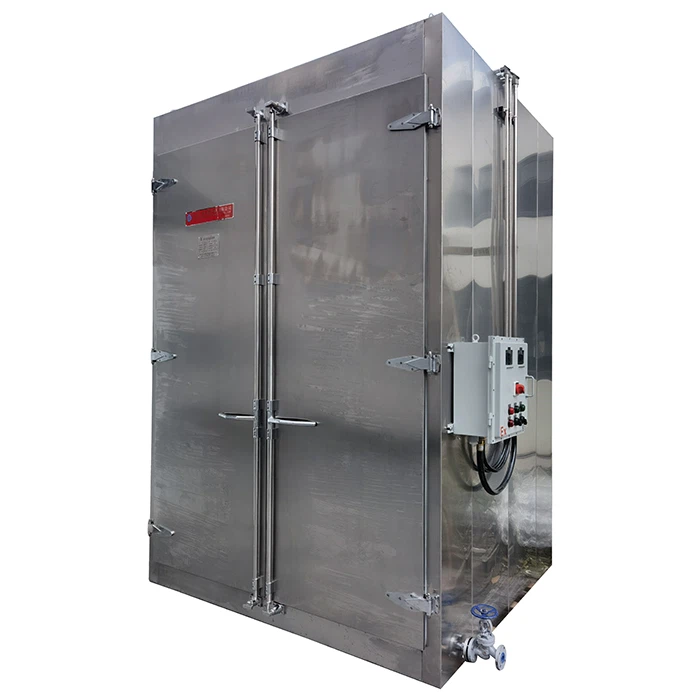
Now, I'd like to mention some related products that might interest you. If you're looking for other industrial heating equipment, we also offer Explosion-proof Oven, Explosion-proof Vacuum Drying Box, and Electric Drying Oven. These products also have their own unique anti - static requirements and features, and they can be great additions to your industrial setup.
If you're in the market for a wheel curing oven or have any questions about anti - static requirements, don't hesitate to reach out. We're here to help you make the right choice for your business. Whether you're a small - scale wheel manufacturer or a large industrial facility, we can provide you with the best solutions for your wheel curing needs.
References
- Electrical Safety Codes: Various local and national electrical safety codes provide guidelines on grounding, electrical equipment safety, and anti - static requirements.
- Industrial Heating Equipment Manufacturer's Manuals: These manuals often contain specific anti - static requirements and maintenance instructions for the equipment.
- Research Papers on Static Electricity in Industrial Environments: There are many research papers available that discuss the effects of static electricity in industrial settings and the best ways to prevent it.