

As a supplier of Ton Barrel Ovens, I often get asked about how the heat distribution in these nifty machines works. In this blog post, I'll break it down for you in plain English so you can understand the science behind it and see why our Ton Barrel Ovens are a great choice for your industrial heating needs.
The Basics of Heat Distribution
Before we dive into the specifics of Ton Barrel Ovens, let's quickly go over the basics of heat distribution. Heat transfer happens in three main ways: conduction, convection, and radiation.
- Conduction: This is the transfer of heat through a material, like a metal wall or a solid object. When one part of the material gets hot, the heat spreads through the rest of it as molecules vibrate and pass the energy along.
- Convection: This involves the movement of fluids (liquids or gases) to transfer heat. As a fluid gets hot, it becomes less dense and rises, while cooler fluid sinks. This creates a circulation pattern that distributes heat.
- Radiation: Heat is transferred in the form of electromagnetic waves. Unlike conduction and convection, radiation can travel through a vacuum and doesn't require a medium.
Heat Distribution in Ton Barrel Ovens
In a Ton Barrel Oven, all three of these heat transfer methods play important roles in ensuring even and efficient heating.
Conduction
Our Ton Barrel Ovens are typically made of high - quality metals, such as stainless steel. When the heating elements inside the oven start to heat up, they transfer heat to the inner walls of the oven through conduction. The metal has good thermal conductivity, which means it can quickly and effectively spread the heat across its surface.
The barrels placed inside the oven also rely on conduction to absorb heat. As the hot oven walls come into contact with the barrels, heat is transferred from the walls to the barrels, and then to the contents inside the barrels. This direct contact allows for a fast and even transfer of heat within the barrels.
Convection
Convection is a key player in ensuring uniform heat distribution in Ton Barrel Ovens. The oven is designed with a built - in fan system. This fan circulates the hot air inside the oven, creating a convection current.
As the heating elements warm up the air near them, the hot air rises. The fan then pushes this hot air towards the lower parts of the oven, displacing the cooler air. The cooler air is then pulled back towards the heating elements to be reheated. This continuous cycle of hot air rising and cooler air being pushed back towards the heat source ensures that every part of the oven gets an equal share of the heat.
This is especially important when you're heating multiple barrels or large - volume items. The convection current helps to prevent hot spots and cold spots, so that the contents of all the barrels are heated evenly.
Radiation
The heating elements in our Ton Barrel Ovens also emit heat through radiation. The radiation waves can travel through the air inside the oven and directly heat the barrels and their contents. Radiation is particularly useful for heating objects that are not in direct contact with the oven walls or are in the center of a group of barrels.
Even though the barrels block some of the radiation, the overall effect of radiation, combined with conduction and convection, helps to achieve a consistent temperature throughout the oven.

Factors Affecting Heat Distribution
Several factors can affect how well the heat is distributed in a Ton Barrel Oven.
Oven Design
The shape and size of the oven play a big role. Our Ton Barrel Ovens are designed with a cylindrical shape, which helps to promote better air circulation. The rounded walls reduce air resistance and allow the convection currents to flow more smoothly.
The placement of the heating elements and the fan is also carefully planned. The heating elements are evenly spaced around the oven to ensure that heat is evenly generated. The fan is positioned in a way that it can effectively circulate the air throughout the entire oven cavity.
Barrel Placement
How you place the barrels inside the oven can impact heat distribution. It's important to leave enough space between the barrels to allow the hot air to flow freely. If the barrels are too close together, the air circulation can be restricted, leading to uneven heating.
We recommend following our guidelines on barrel placement to get the best results. This usually involves arranging the barrels in a way that creates channels for the hot air to move through.
Load Size
The amount of material you're heating in the oven also matters. If you overload the oven with too many barrels or too large a volume of material, the heat may not be able to reach all parts of the load evenly. On the other hand, if the load is too small, the oven may heat up too quickly and cause temperature fluctuations.
Comparing with Other Heating Equipment
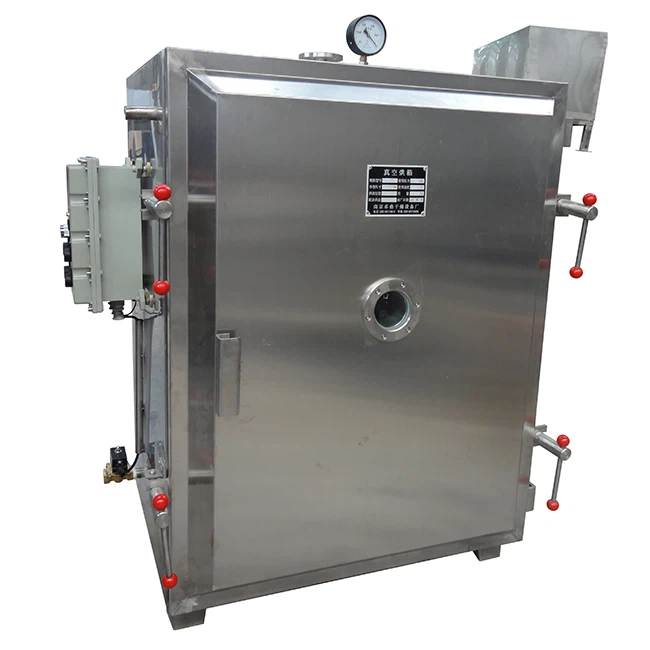
When it comes to industrial heating, there are other types of equipment available. For example, you might consider an Explosion - proof Vacuum Box. This type of equipment is great for applications where you need to heat materials in a vacuum environment, but it may not be as efficient for heating large barrels.
A Mesh Belt Dryer is another option. It's designed for continuous drying of materials on a mesh belt. However, it's not suitable for heating barrels as it's more focused on flat or small - sized items.
Our Ton Barrel Ovens offer a unique advantage in terms of heat distribution for barrel - based applications. The combination of conduction, convection, and radiation ensures that the barrels and their contents are heated evenly, which is crucial for many industrial processes.
If you're also looking for a different type of heating oven, our Thermal Oil Heating Oven is another great option. It uses thermal oil as a heat transfer medium, which can provide a more stable and precise temperature control in some cases.
Why Choose Our Ton Barrel Ovens
Our Ton Barrel Ovens are designed with the latest technology to ensure the best heat distribution. We use high - quality materials that are durable and have excellent thermal properties. The oven's control system allows you to set and maintain the desired temperature easily, so you can have consistent results every time.
Whether you're in the chemical industry, food processing, or any other field that requires heating barrels, our Ton Barrel Ovens can meet your needs. We've been in the business for a long time and have a reputation for providing reliable and efficient heating equipment.
Contact Us for Purchase and Consultation
If you're interested in learning more about our Ton Barrel Ovens or have any questions about heat distribution or other aspects of our products, don't hesitate to reach out. We're here to help you find the right heating solution for your business. Whether you're a small - scale operation or a large industrial company, we can work with you to meet your specific requirements.
References
- Incropera, F. P., & DeWitt, D. P. (2002). Fundamentals of Heat and Mass Transfer. John Wiley & Sons.
- Holman, J. P. (2002). Heat Transfer. McGraw - Hill.